After the Decolonial: Ethnicity, Gender and Social Justice in Latin America by David Lehmann
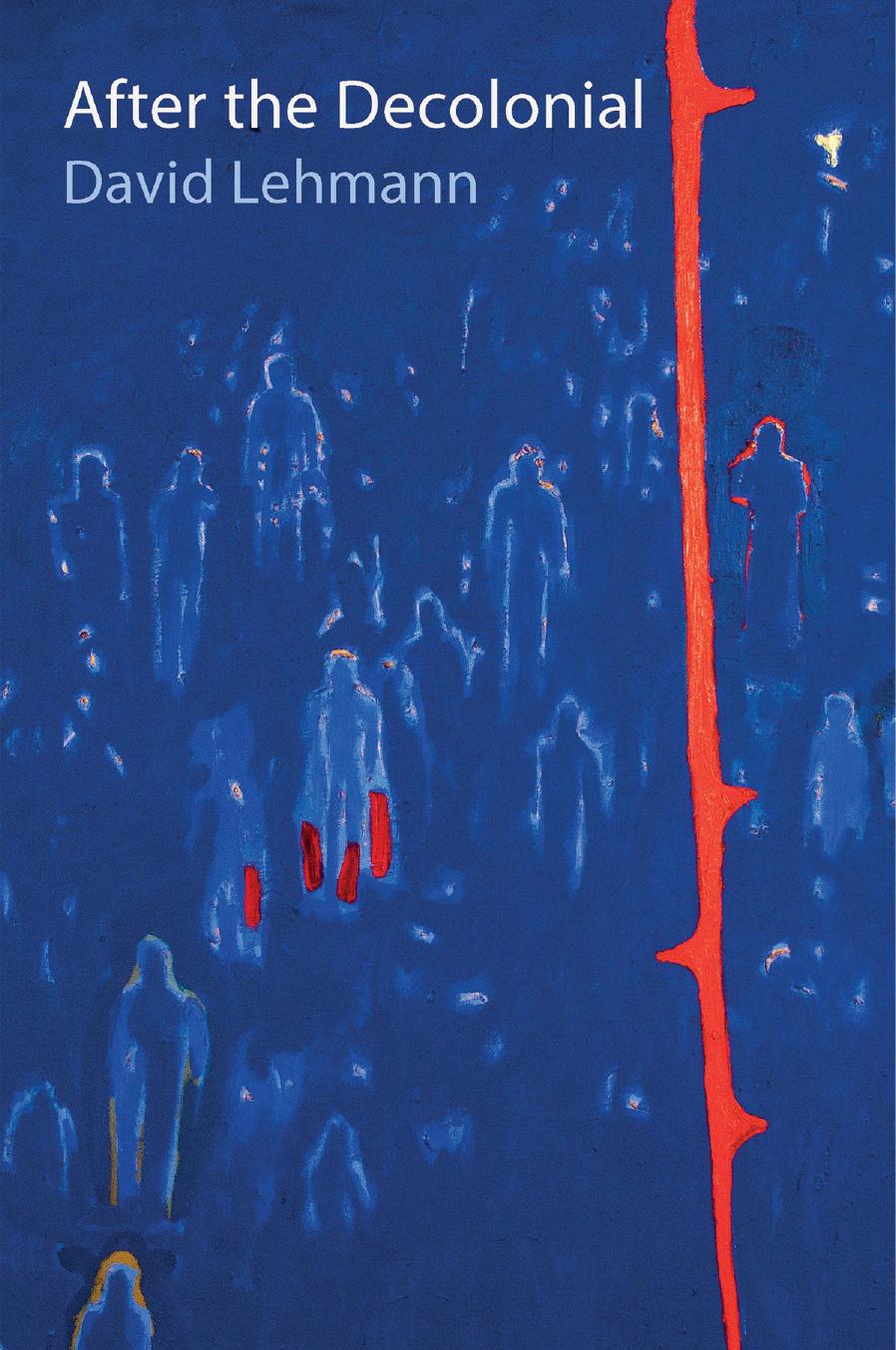
Author:David Lehmann [Lehmann, David]
Language: eng
Format: epub, pdf
Tags: International Relations, Caribbean & Latin American, Political Science, World, General
ISBN: 9781509537532
Google: FONvzgEACAAJ
Goodreads: 58584708
Publisher: Wiley
Published: 2021-12-08T00:00:00+00:00
Colombia
In Colombia, to a greater extent than in Mexico, the judicial system (unlike the security agencies) seems to enjoy a degree of trust among citizens of all classes, ethnicities and racial groups, and legal pluralism operates within parameters laid down by the national judicial system. It is therefore possible to combine a conventional concept of due process with continuing functioning of indigenous law, as described by Sandra Brunegger in her study of the institutionalization of indigenous law in Tolima, where we find judges in indigenous courts sending offenders to state jails and receiving training in judicial procedure from international aid agencies (Brunegger 2011).
Colombian recognition of indigenous territorial rights and of usos y costumbres in law owes much to the CRIC (Consejo Regional IndÃgena del Cauca), founded in 1971. It is the largest and most enduring of Latin American indigenous organizations. According to the 2018 Census, Colombia has a much smaller indigenous population than other Andean countries, numbering less than 5 per cent (1.9 million), based on self-assignment, as well as 115 pueblos nativos, although many must live in towns and cities and the overall figure seems to be an underestimate.26 The Departamento del Cauca, home to the CRIC, accounts for about one-sixth of them and rises from the sea to the high Andes in the south of the country, bordering Ecuador. Like the Zapatistas, the CRIC has created a system of self-government benefiting from the rediscovery of Law 89 of 1890 under which the colonial institution of the resguardo was confirmed as the institutional form of indigenous ownership of land with their own councils â cabildos. This law rendered subsequent usurpation and encroachment invalid, enabling legal restitution (Gros 2010: 83). The movement for land recovery and institution building found further support in the countryâs very liberal and pro-indigenous 1991 Constitution.
CRIC is not an armed organization, although it emerged in parallel with the Quintin Lame armed land recovery movement and has had intermittent alliances with the M-19 guerrilla. When it set out on its campaign to recover land rightly belonging to the resguardos, CRIC and its leaders suffered attacks and murders from landed interests affected by its claims and by state repression (Jimeno and Klatt 2014: Introduction). Over the years since then, like the rest of the country, it has had to face up to the exactions of paramilitaries, traffickers and the FARC guerrillas. Quintin Lame laid down its arms to take part in the 1991 Constitutional process.
The hallmark of CRIC is institution building. It achieved success recovering resguardo territory and establishing elected cabildos to manage it. Its semi-official history states that âmost of the land has been recoveredâ through claims based on resguardo title (Bolaños et al. 2012: 80). CRIC rebuilt cabildos where they had disappeared, removed them where they were under the control of non-indigenous or other adverse interests and redirected them to support CRIC and its struggle for land (Gros 1991).27 Despite a sometimes hostile environment, it has enjoyed a favourable disposition from some state institutions or at least from officials in those institutions and in the judiciary.
Download
After the Decolonial: Ethnicity, Gender and Social Justice in Latin America by David Lehmann.pdf
This site does not store any files on its server. We only index and link to content provided by other sites. Please contact the content providers to delete copyright contents if any and email us, we'll remove relevant links or contents immediately.
| Arms Control | Diplomacy |
| Security | Trades & Tariffs |
| Treaties | African |
| Asian | Australian & Oceanian |
| Canadian | Caribbean & Latin American |
| European | Middle Eastern |
| Russian & Former Soviet Union |
The Secret History by Donna Tartt(19088)
The Social Justice Warrior Handbook by Lisa De Pasquale(12190)
Thirteen Reasons Why by Jay Asher(8909)
This Is How You Lose Her by Junot Diaz(6886)
Weapons of Math Destruction by Cathy O'Neil(6279)
Zero to One by Peter Thiel(5801)
Beartown by Fredrik Backman(5754)
The Myth of the Strong Leader by Archie Brown(5507)
The Fire Next Time by James Baldwin(5444)
How Democracies Die by Steven Levitsky & Daniel Ziblatt(5218)
Promise Me, Dad by Joe Biden(5153)
Stone's Rules by Roger Stone(5087)
A Higher Loyalty: Truth, Lies, and Leadership by James Comey(4962)
100 Deadly Skills by Clint Emerson(4925)
Rise and Kill First by Ronen Bergman(4788)
Secrecy World by Jake Bernstein(4753)
The David Icke Guide to the Global Conspiracy (and how to end it) by David Icke(4717)
The Farm by Tom Rob Smith(4507)
The Doomsday Machine by Daniel Ellsberg(4490)
